
Hierarchy before decoration
Make the next useful action obvious, then use visual styling to reinforce—not compete with—that priority.
Two interface systems designed for very different contexts: an emotionally engaging mobile wellbeing experience and an information-dense SaaS dashboard.
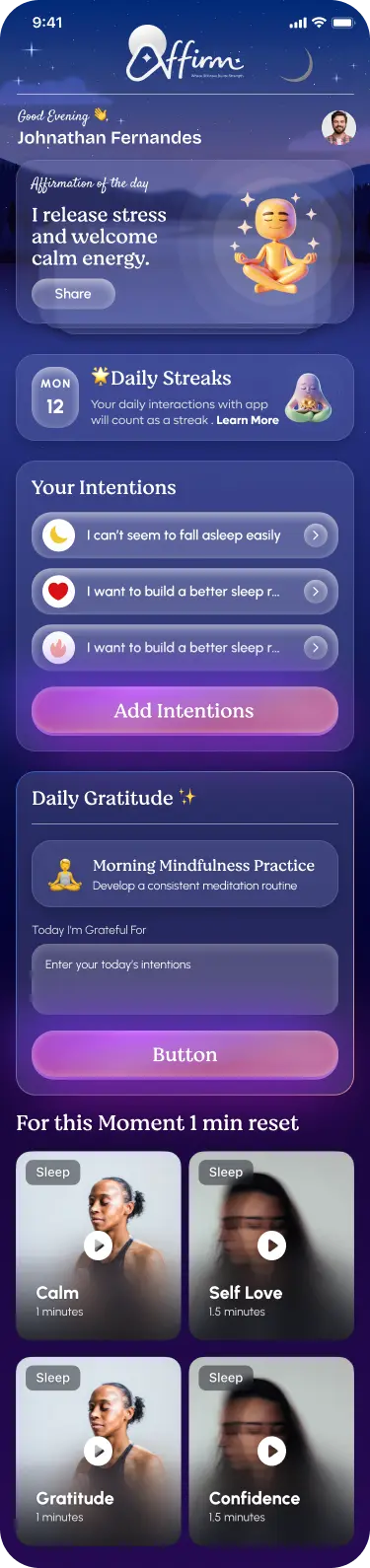
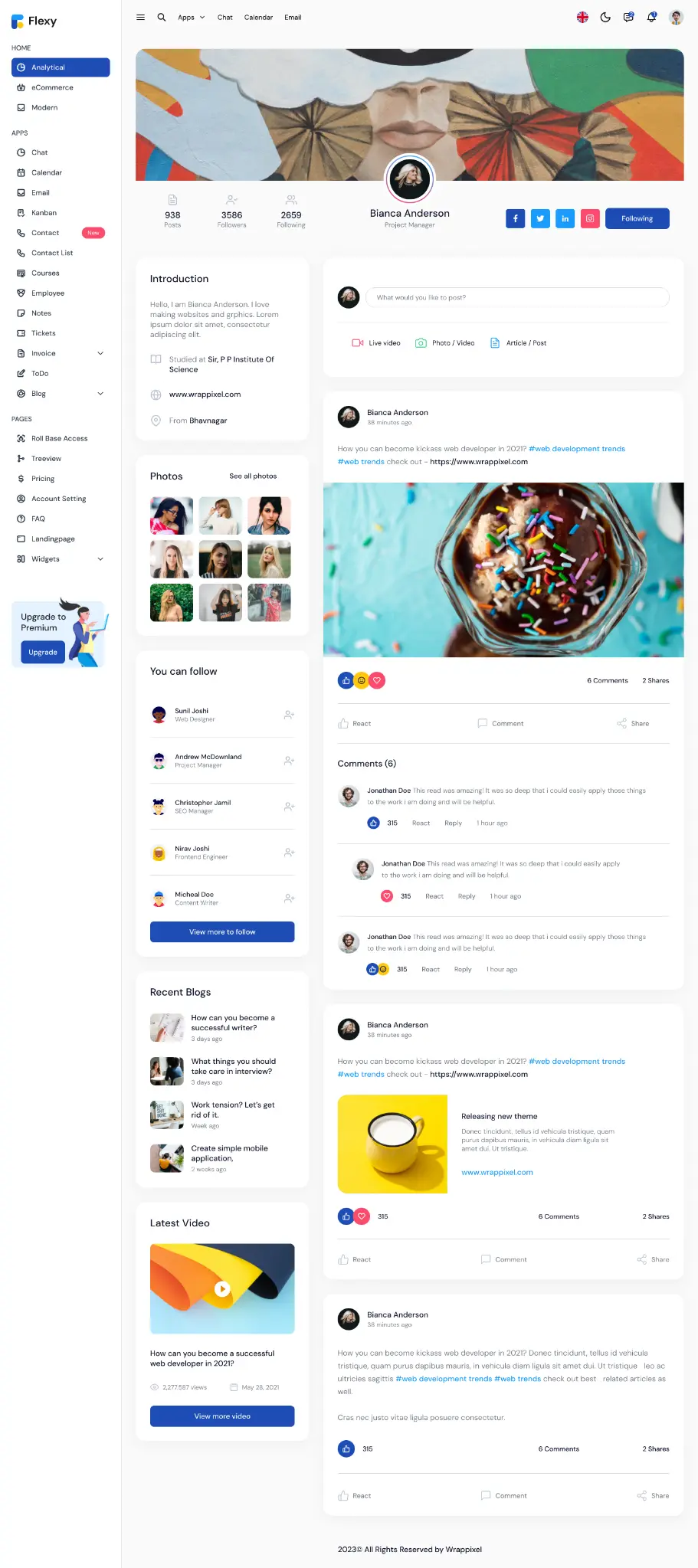
This combined case study shows how the same product-design principles adapt across form factors and audiences. Affirm turns daily wellbeing actions into a calm, encouraging mobile journey. Flexy organises navigation, profile activity and content-heavy workflows into a scalable desktop dashboard system.
Good interface design is not one visual style applied everywhere. The mobile experience needed emotion, focus and touch-friendly simplicity, while the dashboard needed density, predictable navigation and reusable patterns. Each design had to solve its own product problem while remaining consistent and buildable.
The visual systems change with the user and context, while the underlying decisions remain grounded in clarity, consistency and implementation.
Make the next useful action obvious, then use visual styling to reinforce—not compete with—that priority.
Design repeated cards, navigation, actions and states as systems so additional screens remain consistent.
Use focused, touch-friendly flows on mobile and structured density where desktop users need more information at once.
Create layouts, components and behaviours that translate cleanly into responsive production interfaces.
A guided home experience for affirmations, intentions, gratitude and short mindfulness content. The design uses a calm night-time atmosphere, prominent daily guidance and progressive sections that encourage a lightweight repeat habit.
A modular dashboard concept for profile activity, social content and broader application workflows. Its persistent navigation, content columns and repeatable panels establish a structure that can accommodate many tools without losing orientation.
These concepts show how product thinking, interaction structure and visual direction work together across both focused consumer journeys and operational desktop products.
Together, the concepts demonstrate range without losing product discipline: a distinctive mobile experience built around emotion and habit, and a practical desktop system built around navigation, density and repeatable components.
Bring the product idea, workflow or existing interface. We’ll help turn it into a clear, buildable experience.